
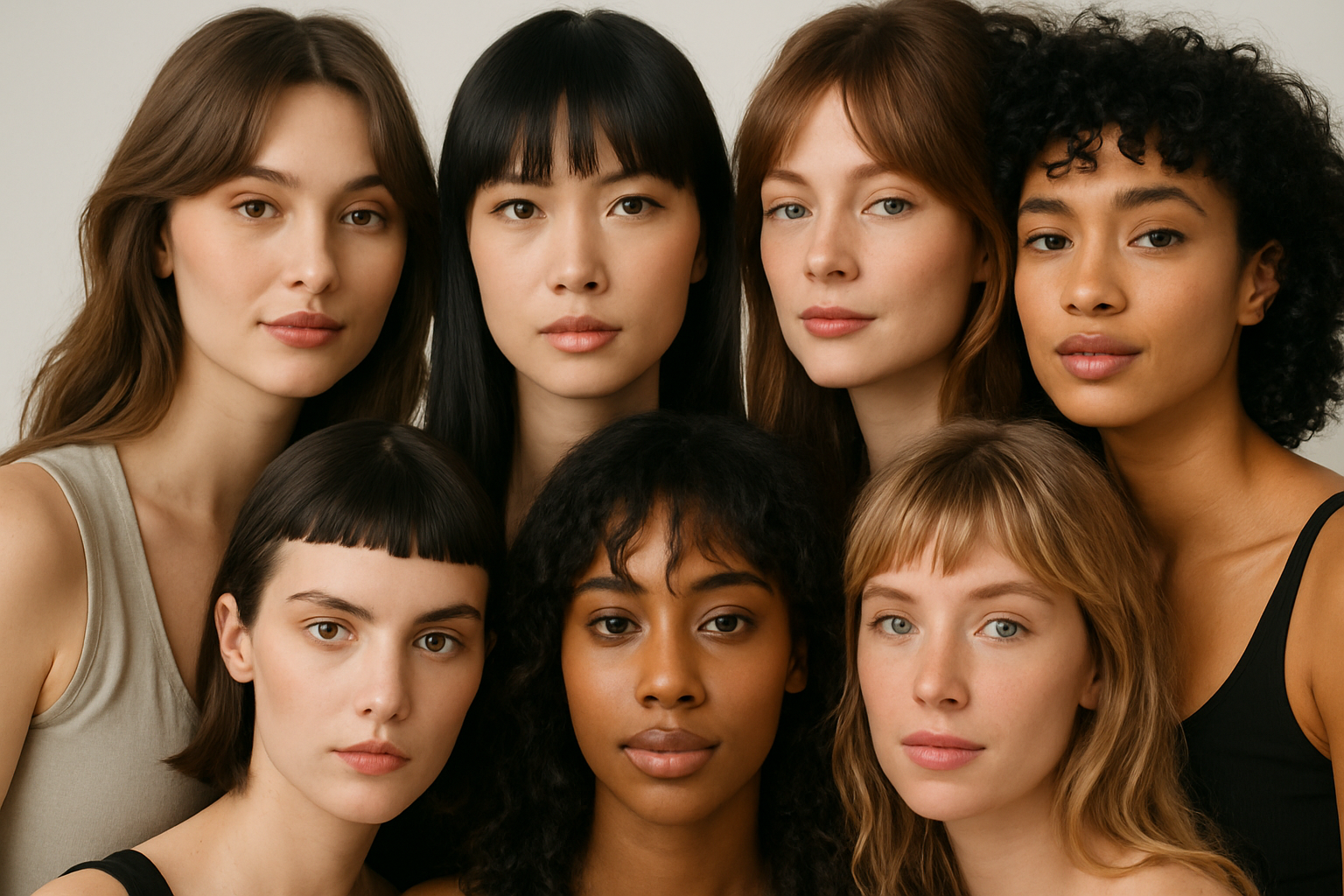
Fringe—aka bangs—can make a bigger impact on your look than almost any other haircut detail. But the secret to pulling them off? Choosing a fringe that flatters your face shape, hair texture and styling preferences. Here are eight distinct fringe ideas, each with guidance on who they suit, what to ask for at the salon, and key tips for styling and maintenance.
1. Curtain Bangs
- What they look like: Longer, parted in the middle or slightly off-center, framing the face and blending into the rest of your haircut.
- Who they suit: Universally flattering, especially on oval, square, and heart-shaped faces. Great for softening strong jawlines and foreheads.
- How to ask for them: “I’d like curtain bangs that hit around cheekbone level, softly layered to blend into the rest of my hair.” If your hair is wavy or thick, ask your stylist to thin out the ends so they don’t feel bulky.
Styling & Maintenance
- Blow dry with a round brush, curling away from the face for a soft swoop.
- A little dry shampoo at the roots can keep them fresh and voluminous between washes.
- Trim every 6-8 weeks to keep the length in the flattering zone.
2. Blunt Straight-Across Bangs
- What they look like: Full, straight-across fringe that sits at or just below the eyebrows. Makes a bold statement.
- Who they suit: Best for oval or longer face shapes, and straight or slightly wavy hair. Can make round faces appear shorter and isn’t ideal for very curly hair without regular straightening.
- How to ask for them: “I want full, blunt bangs cut straight across, grazing my brows but not in my eyes.” If you have cowlicks or a strong hair whorl at the hairline, ask if they can be adjusted for your growth pattern.
Styling & Maintenance
- Style with a flat brush and a blow dryer for a glassy finish.
- Combat oiliness with a light dusting of translucent powder or dry shampoo.
- Frequent trims (every 3-4 weeks) are key to keep them sharp.
3. Wispy Bangs
- What they look like: Soft, feathery, and slightly see-through, with lighter density along the hairline. Gentle and feminine.
- Who they suit: Small foreheads, fine or straight hair, or anyone wanting a gentle introduction to bangs. Especially flattering on heart, oval, and square faces.
- How to ask for them: “I’d like soft, wispy bangs that are longer at the sides and lightly feathered so they don’t look dense.”
Styling & Maintenance
- Use a small round brush or even just your fingers to style for a carefree look.
- Can be air-dried with a bit of lightweight styling cream for separation.
- Grow out gracefully with less maintenance than blunt bangs.
4. Side-Swept Bangs
- What they look like: Bangs angled to one side, often blending with face-framing layers. Soft, versatile, and easy to grow out.
- Who they suit: All face shapes, especially round and heart-shaped faces, as the diagonal line draws the eye and elongates the face.
- How to ask for them: “I’d like side-swept bangs that start at brow level on one side and taper down to my cheekbone, blending into my layers.”
Styling & Maintenance
- Blow dry bangs in the opposite direction you want them to fall, then sweep them back for maximum volume.
- Use a light-setting spray if you want the shape to last all day.
5. Micro Bangs (Baby Bangs)
- What they look like: Ultra-short bangs, usually sitting well above the eyebrows for a retro or edgy effect.
- Who they suit: Oval and heart-shaped faces, or anyone wanting a bold, artsy vibe. Not ideal if you want to camouflage a high forehead.
- How to ask for them: “I want micro bangs cut straight or slightly curved, around 1–1.5 inches above my eyebrows.” Bring inspiration pics to show your desired length and density.
Styling & Maintenance
- Minimal styling needed—air dry or flat iron for maximum definition.
- Frequent trims (every 2-4 weeks) to avoid an awkward grow-out phase.
6. Curly or Textured Fringe
- What they look like: Bangs cut to encourage your natural curl or wave pattern, often with a rounded or slightly uneven finish.
- Who they suit: Naturally curly, coily, or wavy hair of all face shapes. Especially flattering for softening strong jawlines or foreheads.
- How to ask for them: “I’d like bangs that follow my natural curl pattern, cut dry so we can see how they spring up. I want a bit of length on the sides, too.”
Styling & Maintenance
- Apply curl cream or gel to damp bangs and let them air dry.
- Refresh with a water spray and a little product between washes.
- Trim dry to avoid shrinkage surprises.
7. Grown-Out Bangs
- What they look like: Longer, face-framing fringe that hits between cheekbone and jawline. Melts into layers or the rest of your hair.
- Who they suit: Nearly all face shapes, especially those wanting a low-maintenance look or in the process of growing out shorter bangs.
- How to ask for them: “I want longer bangs that hit mid-cheek or jawline, softly blended into my haircut, so they don’t look like ‘half-grown’ bangs.”
Styling & Maintenance
- Pin back or tuck behind your ears for versatility.
- Use a round brush to sweep them away from your face.
- Trim as needed to maintain a soft, face-framing effect.
8. Textured/Choppy Bangs
- What they look like: Piecey, lightly razored or point-cut, with uneven ends for a modern, effortless edge.
- Who they suit: Works on all face shapes, especially square or angular faces that benefit from a softened hairline. Best on medium-to-thick hair for visible texture.
- How to ask for them: “I’d like choppy, textured bangs cut with a razor or scissors, not too thick, with some variation in length.”
Styling & Maintenance
- Scrunch with a little styling wax or pomade for separation.
- Air dry or rough-dry for a messy, undone look.
Tips for Choosing & Maintaining Your Fringe
- Bring photos: Stylists love reference pictures. Show a few examples to communicate length, thickness, and shape.
- Discuss your hair texture: Be honest about your hair’s natural pattern—fringes behave differently on straight, wavy, and curly hair.
- Ask about daily styling: Some fringes need more morning attention than others (like blunt or micro bangs).
- Consider your lifestyle: If you exercise daily or don’t want to style every morning, opt for lower-maintenance options like curtain or grown-out bangs.
- Trim at home only if confident: If you need to snip between appointments, use sharp shears and always trim less than you think you need. The Jason 440C Professional Shear & Thinner Set can help if you’re comfortable DIY-ing, but err on the side of caution.
FAQ: Your Fringe Questions Answered
- How can I tell which fringe will suit my face shape?
Stand in natural light, pull back your hair, and outline your face shape in a mirror (lipstick or washable marker works). Compare with the ideas above for general guidance, but remember: preference and hair texture matter as much as face shape. - Can I get bangs if I have curly or coily hair?
Absolutely. The key is to cut bangs dry, with your natural curl pattern in mind, and to allow for shrinkage. Start longer; you can always go shorter. - What’s the best way to style bangs that separate or get oily?
A touch of dry shampoo at the roots and a quick blast with a round brush or fingers helps re-fluff limp bangs. Carry a mini dry shampoo or powder for midday touch-ups. - How do I avoid “triangle” or poufy bangs?
Ask your stylist to thin or feather the ends if your hair is thick. Styling with a round brush and angling the dryer downward also helps. - How do I grow out bangs gracefully?
Start blending them into longer face-framing layers. Use clips or headbands to keep them off your face as they grow. See grow out bangs for more ideas.
Ready to try a fringe? Take these inspiration ideas to your next appointment—or experiment with clip-in bangs first to test the look. For more on face shape and haircut inspiration, see best haircuts for face shape.
Some links may lead to products available through Hair & Glory. Choose products based on your own hair needs and preferences.